Startupmonkeys

Leveraging Cloud Computing for Startup Growth: A Practical Guide for Founders

Most startups fail not because of bad ideas, but because they run out of runway before they find product-market fit. Cloud computing changes that equation. It hands early-stage companies the same infrastructure muscle that enterprise giants use — without the six-figure hardware bill or the 18-month procurement cycle.

This guide breaks down how to actually use cloud services to grow your startup, not just a theoretical overview of what the cloud is.

Why Cloud Computing Is a Game-Changer for Startups

Cloud computing gives startups immediate access to scalable infrastructure, development tools, and global distribution — with no upfront capital expenditure. That combination is uniquely suited to the startup model, where speed and capital efficiency matter more than almost anything else.

Traditional infrastructure forced companies to predict their capacity needs months in advance. Buy too little hardware and you cap your growth. Buy too much and you've burned cash on idle servers. Cloud eliminates that binary. You provision what you need today and expand tomorrow, sometimes within minutes.

The deeper advantage is operational agility. A startup can ship a new feature, watch how users respond, and roll it back or double down — all within a single sprint. That kind of iteration velocity is nearly impossible with on-premise infrastructure. The cloud doesn't just reduce costs; it changes how fast you can learn.

Understanding Cloud Service Models: IaaS, PaaS, and SaaS

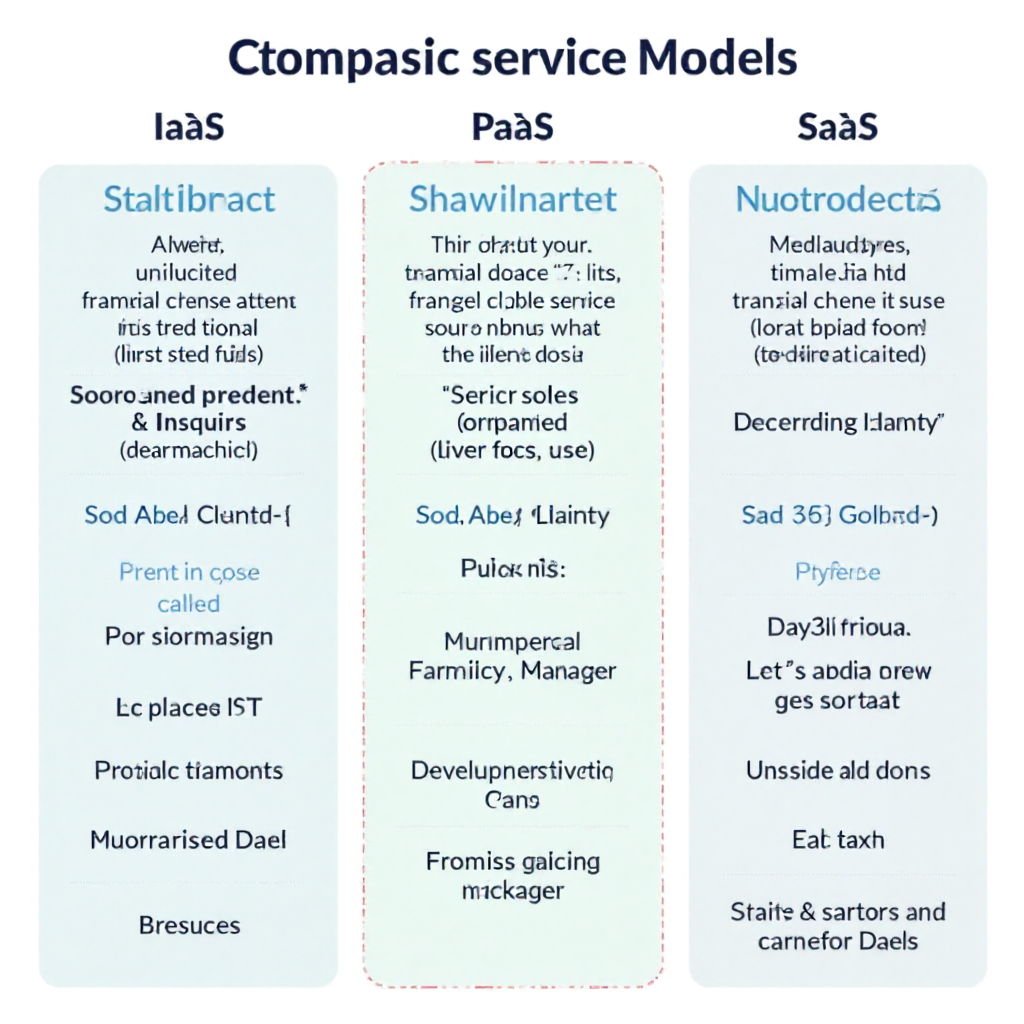
The three core cloud service models — Infrastructure as a Service, Platform as a Service, and Software as a Service — serve different needs, and choosing the wrong one for your stage is a common and costly mistake.

  • Infrastructure as a Service (IaaS) gives you raw compute, storage, and networking resources. You manage the operating system, runtime, and application layer. This suits startups with engineering depth that need maximum control — think compute-heavy workloads or custom networking requirements.
  • Platform as a Service (PaaS) abstracts the infrastructure layer entirely. You deploy code; the platform handles provisioning, scaling, and patching. For most early-stage teams, PaaS is the right default. It lets a two-person engineering team move at the speed of a much larger one.
  • Software as a Service (SaaS) means you're consuming a fully managed application — think CRM tools, analytics platforms, or communication software. SaaS reduces operational overhead for non-core functions, freeing your team to focus on what actually differentiates your product.

A practical rule of thumb: start with SaaS for business operations, PaaS for product development, and only consider IaaS when your technical requirements outgrow what managed platforms offer. Most seed-stage startups never need to go below PaaS.

Cutting Costs Without Cutting Corners: The Financial Case for Cloud

The pay-as-you-go pricing model is the single biggest financial advantage cloud computing offers startups. Instead of committing capital to hardware that depreciates regardless of usage, you pay only for what you consume — and you can stop at any time.

The cost savings go beyond the obvious hardware elimination. Consider what disappears from your balance sheet: data center leases, power and cooling costs, hardware maintenance contracts, and the IT staff needed to manage physical infrastructure. For a pre-revenue startup, those avoided costs can be the difference between extending runway by six months or not.

Managed services compound this effect. When a cloud provider handles database administration, load balancing, or security patching, your engineers spend time building product instead of maintaining infrastructure. That's not just a cost saving — it's a productivity multiplier.

One honest caveat: cloud costs can surprise you if left unmonitored. Unused resources, over-provisioned instances, and forgotten development environments accumulate quietly. Set up cost alerts and review your cloud spend monthly from day one. The pay-as-you-go model is only efficient if someone is actually watching the meter.

Scaling Fast: How Cloud Infrastructure Supports Rapid Growth

Cloud infrastructure lets startups scale their product without re-architecting their stack every time they hit a new growth threshold. Auto-scaling, elastic storage, and globally distributed availability zones mean your infrastructure can absorb a traffic spike from a viral launch without a 2 a.m. emergency.

This matters most at the moments of highest opportunity. If your startup lands a major press feature or a partnership that drives sudden demand, the last thing you want is for your product to go down under load. A well-configured cloud environment handles that automatically — scaling out during peaks and scaling back down when traffic normalizes, so you're not paying for peak capacity around the clock.

Cloud-native architecture takes this further. Building your product as a set of loosely coupled services (rather than a monolithic application) means individual components can scale independently. Your payment processing service doesn't need to scale when your recommendation engine is under load. This kind of granular scalability is difficult to achieve with traditional infrastructure and much more accessible when you build on the cloud from the start.

Cloud Tools That Accelerate Product Development

Beyond infrastructure, the cloud ecosystem gives startup engineering teams access to tools that dramatically compress development timelines. DevOps tooling and CI/CD pipelines — continuous integration and continuous deployment — are the most impactful of these.

A CI/CD pipeline automates the process of testing, building, and deploying code. Every time a developer pushes a change, it runs through automated tests and, if it passes, ships to production without manual intervention. For a small team, this is transformative. You remove the bottleneck of manual deployment coordination and reduce the risk of human error during releases.

Managed databases, serverless functions, and pre-built machine learning APIs extend this further. Instead of spending weeks building authentication infrastructure or a search feature from scratch, you integrate a managed service and move on. The result is a faster path from idea to working product — which, in a startup context, translates directly to more learning cycles before your runway runs out.

The trade-off is worth naming: heavy reliance on managed services can make your architecture harder to migrate later. Design with that in mind, even if you don't act on it immediately.

Security, Compliance, and Avoiding Vendor Lock-In

Cloud providers offer enterprise-grade security infrastructure that most startups couldn't afford to build independently — but that doesn't mean security is someone else's problem. The shared responsibility model means the provider secures the infrastructure; you're responsible for securing your data, access controls, and application layer.

For startups handling sensitive user data or operating in regulated industries (healthcare, fintech, legal), compliance requirements like GDPR, HIPAA, or SOC 2 are non-negotiable. The good news is that major cloud platforms provide compliance frameworks and certified services that make meeting these standards more achievable. The work still falls on your team to configure them correctly.

Vendor lock-in is the risk that gets underestimated most often. When you build deeply on one provider's proprietary services — their specific database engine, their custom event bus, their machine learning platform — migrating later becomes expensive and disruptive. This isn't a reason to avoid cloud services, but it is a reason to be deliberate about which ones you adopt.

A practical mitigation strategy: use open standards and containerization (Docker, Kubernetes) where possible. Abstract your infrastructure dependencies behind internal interfaces so that swapping a provider later requires changing a configuration, not rewriting your core product. You can read more about cloud security best practices in the NIST Guidelines on Security and Privacy in Public Cloud Computing.

Choosing the Right Cloud Strategy for Your Startup Stage

The right cloud approach depends on where your startup is, not just where you want to go. Matching your strategy to your current stage prevents both under-investment (which limits growth) and over-engineering (which burns time and money you don't have).

At the pre-seed and seed stage, simplicity wins. A single cloud provider with managed services reduces operational complexity and keeps your team focused on product. Multi-cloud architectures — splitting workloads across two or more providers — add resilience but also add cost and coordination overhead that most small teams aren't equipped to handle well.

As you approach Series A and beyond, the calculus shifts. If you're processing significant transaction volumes, operating in multiple regions, or facing customer requirements around data residency, a multi-cloud or hybrid cloud strategy starts to make sense. Hybrid cloud — combining public cloud resources with some on-premise or private cloud infrastructure — is particularly relevant for startups in regulated industries where certain data can't leave a specific environment.

The honest answer most founders don't want to hear: your cloud strategy should be boring and functional at the early stage. Pick one provider, use managed services aggressively, monitor your costs, and revisit the architecture when you have real constraints that justify the complexity of changing it.

Frequently Asked Questions

What is the most cost-effective cloud platform for an early-stage startup?

There's no universal answer — the most cost-effective platform is the one your team already knows. Switching costs and learning curves eat into the savings from any pricing difference. That said, most early-stage startups find that PaaS offerings give the best value by eliminating infrastructure management overhead entirely.

How does cloud computing help startups compete with larger companies?

Cloud computing levels the infrastructure playing field. A five-person startup can access the same global content delivery networks, the same machine learning APIs, and the same security tooling as a Fortune 500 company. The competitive advantage shifts back to product thinking and execution speed — areas where small, focused teams can genuinely outperform larger ones.

When should a startup consider moving from shared hosting to cloud infrastructure?

The trigger is usually one of three things: your traffic has grown beyond what shared hosting can reliably serve, you need more control over your environment (custom runtimes, specific configurations), or you're hitting performance bottlenecks that shared resources can't resolve. If any of those apply, it's time to move — ideally before they become emergencies.

What are the biggest mistakes startups make when adopting cloud services?

The most common are: failing to monitor cloud spend until a surprise invoice arrives, over-engineering the architecture before there's a real scaling problem, and adopting too many proprietary managed services without thinking about the migration cost later. Start simple, measure everything, and add complexity only when the problem demands it.

Is a multi-cloud strategy practical for small startup teams?

Rarely, at the early stage. Multi-cloud adds meaningful operational complexity — separate billing, different APIs, inconsistent tooling. Unless you have a specific regulatory or resilience requirement that mandates it, a single cloud provider is almost always the right choice until you have the engineering capacity to manage the overhead properly.

{{HOMEPAGE_LINKS}}