Startupmonkeys

Why MVP Development Is Critical for Startup Success (And How to Get It Right)

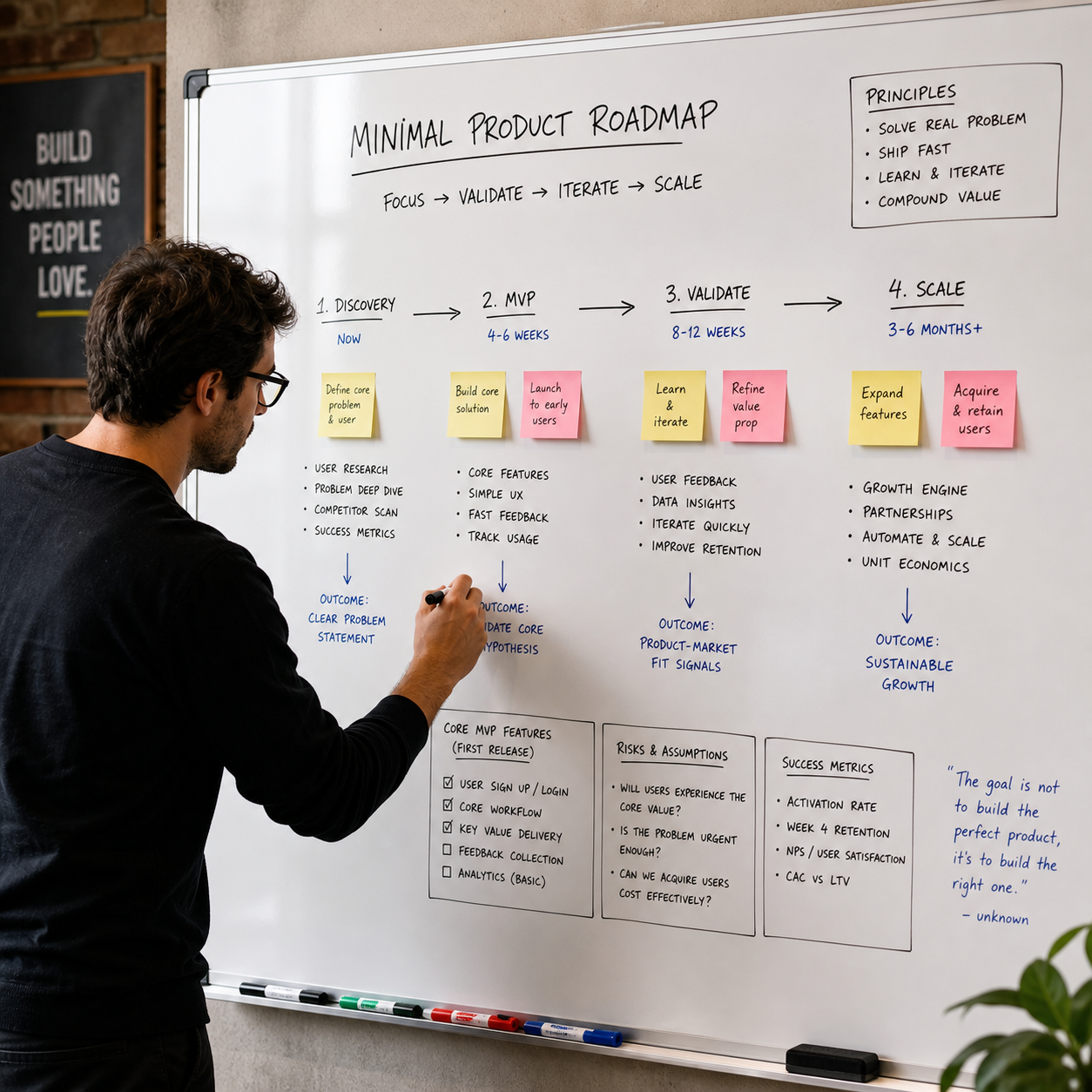
Most startups don't fail because they built the wrong thing. They fail because they spent 18 months and $400,000 building the right thing for the wrong market. A Minimum Viable Product exists precisely to prevent that outcome — and understanding why requires more than a surface-level definition.

What Is an MVP and What It Is Not

An MVP is the smallest version of your product that delivers enough value to attract early adopters and generate real feedback. It is not a broken prototype, a half-finished app, or a "version 0.1" you're embarrassed to show people.

The misconception that trips up most founders is thinking an MVP means cutting corners on quality. It doesn't. It means cutting scope. The difference matters enormously. A well-built MVP does one thing well — the one thing your target user actually needs — and does it reliably enough that people will use it and tell you what they think.

Eric Ries, who popularized the concept in The Lean Startup, framed the MVP as a vehicle for validated learning: a structured experiment designed to test a core business hypothesis. That framing shifts the goal from "ship a product" to "learn something true about the market." Those are very different objectives, and the distinction shapes every decision you make during development.

An MVP can take many forms — a landing page, a concierge service, a single-feature SaaS tool, or a manually-operated backend disguised as automation (Zapier famously started this way). The form follows the question you're trying to answer.

The Real Cost of Skipping the MVP Stage

Skipping the MVP stage is one of the most expensive decisions a startup can make, and the damage rarely shows up on a spreadsheet until it's too late. Founders who bypass market validation typically burn through their entire runway building a product that solves a problem people don't have — or don't have badly enough to pay for.

Consider the math. A typical early-stage SaaS startup might spend $300,000–$600,000 over 12–18 months building a full-featured product. If the core value proposition turns out to be wrong, that entire investment is functionally unrecoverable. An MVP that tests the same hypothesis might cost $30,000–$80,000 and take 8–12 weeks. The learning is the same. The financial exposure is not.

Beyond capital, there's a strategic cost: opportunity cost. Every month spent over-engineering a product is a month competitors spend talking to customers and iterating. Speed of learning, not speed of building, is the actual competitive advantage in early-stage markets.

The founders who skip MVPs often do so for understandable reasons — they're confident in their vision, they don't want to show investors an incomplete product, or they believe their market is too sophisticated for a stripped-down version. Each of these reasons feels logical and is usually wrong.

How MVPs Help You Find Product-Market Fit Faster

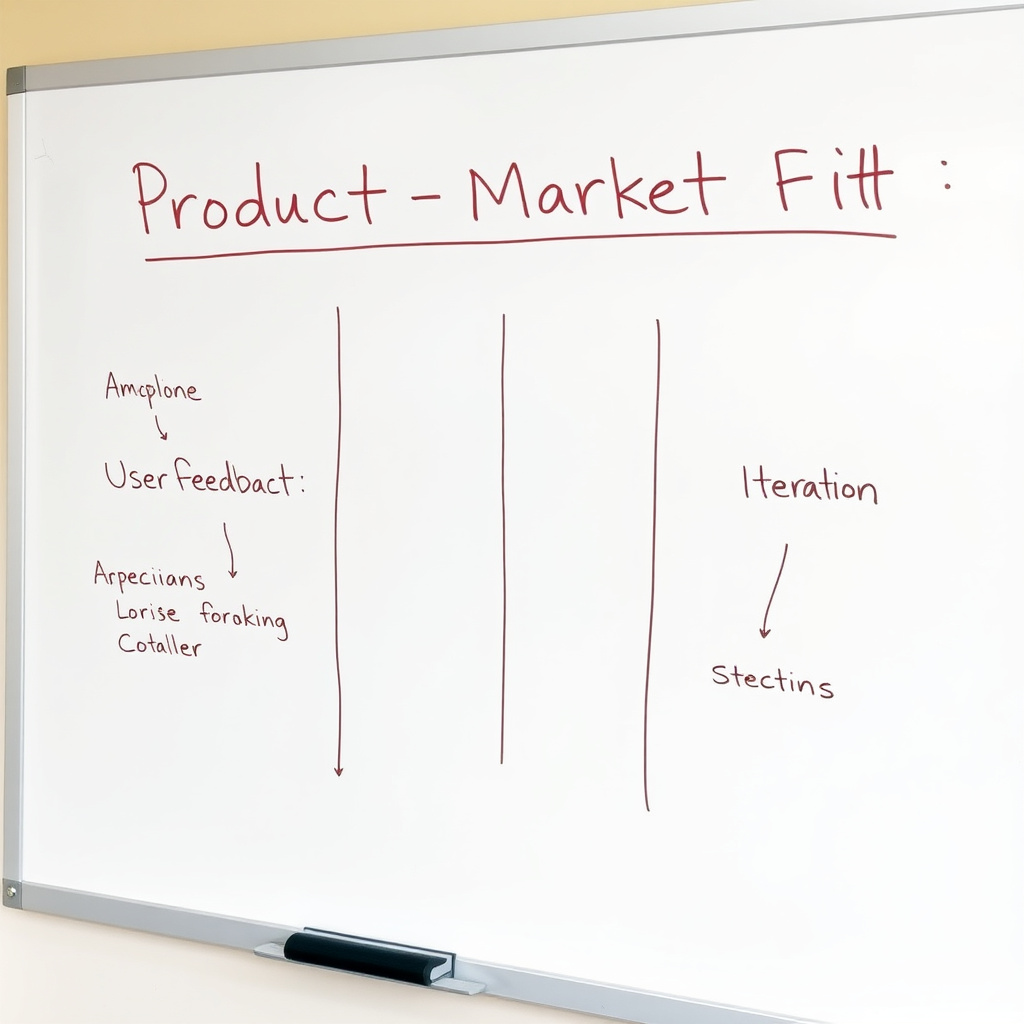
Product-market fit — the condition where a product satisfies a strong market demand — is the single most important milestone for any early-stage startup. MVPs accelerate the path to that milestone by replacing assumption with evidence.

The mechanism is straightforward. When you release an MVP to early adopters, you're not asking them to imagine what they'd want. You're watching what they actually do. Do they come back? Do they refer others? Do they complain about missing features, or do they quietly stop using it? Each of these signals is data. Together, they tell you whether you're in the right neighborhood — and if not, which direction to walk.

Early adopters are uniquely valuable here because they're willing to tolerate friction that mainstream users won't. They'll use your clunky interface, submit a support ticket when something breaks, and give you detailed feedback because they genuinely want the problem solved. That tolerance is a temporary window. Use it to learn, not to delay.

The relationship between rapid MVP deployment and product-market fit isn't about luck. It's about compressing the feedback cycle. Each iteration brings you closer to the version of the product that a larger market will actually adopt.

Protecting Your Runway: MVPs and Resource Efficiency

Runway — the number of months a startup can operate before running out of cash — is the oxygen of early-stage companies. An MVP approach protects runway by concentrating resources on the features that test your core hypothesis, and nothing else.

This is harder than it sounds. Engineers want to build the right architecture. Designers want the interface to feel polished. Co-founders argue over features that "customers will definitely want." The MVP discipline requires saying no to all of that until the market has confirmed the foundation is solid.

A practical way to enforce this is the "one metric that matters" principle: identify the single behavior that would confirm your hypothesis (a purchase, a repeat visit, a referral), build only what's necessary to drive that behavior, and measure everything against it. Features that don't contribute to that metric don't belong in the MVP.

Keeping burn rate manageable during the MVP phase also preserves optionality. If the first hypothesis is wrong, you still have capital to test a second one. Many successful companies — Slack, Instagram, YouTube — pivoted from their original MVP after the data pointed elsewhere. That pivot was only possible because they hadn't spent everything on version one.

The Feedback Loop That Drives Smarter Iterations

The user feedback loop is the engine of iterative development — but only if it's structured. Collecting feedback casually, or only from users who volunteer opinions, produces a distorted picture. The loudest voices rarely represent the median user.

A disciplined feedback process during the MVP phase includes both qualitative and quantitative signals. Qualitative interviews with 10–15 active users reveal the why behind behavior. Quantitative data from product analytics reveals the what — where users drop off, which features get used, what paths lead to conversion. Neither source alone is sufficient.

One underappreciated benefit of this process is its effect on technical debt. When you build features based on validated user needs rather than internal assumptions, you build less. Less code means fewer architectural compromises, fewer edge cases to maintain, and a cleaner foundation for scaling. Teams that skip the MVP phase often arrive at Series A with a product that works but is structurally difficult to extend — because it was built to satisfy a roadmap, not a user.

The feedback loop also changes the team's relationship with uncertainty. Instead of debating which features to build, you're running experiments. That shift in mindset — from opinion-driven to evidence-driven — is one of the lasting cultural benefits of MVP discipline.

When to Pivot, Persevere, or Scale Based on MVP Data

MVP data gives you three choices: pivot, persevere, or scale. Knowing which signal points to which decision is one of the most consequential skills a founder can develop.

A pivot is warranted when the data shows that your core hypothesis was wrong, but you've learned something true about the market that points in a different direction. The key word is "learned." A pivot based on weak data or founder anxiety is just expensive wandering. A pivot based on consistent user behavior — people using your product for something you didn't design it for, for example — is a strategic reorientation grounded in evidence.

Persevering makes sense when the hypothesis is directionally correct but execution needs refinement. If users understand the value proposition and engage with the product, but conversion or retention metrics are below target, the answer is usually iteration, not reinvention. Founders often mistake a fixable execution problem for a fundamental market problem, which leads to premature pivots.

Scaling is the right move when you have consistent evidence of product-market fit: strong retention, organic referrals, and users who would be genuinely disappointed if the product disappeared (a benchmark Sean Ellis popularized as the "40% rule"). Scaling before that evidence exists is how startups turn a small problem into an expensive one.

Common MVP Mistakes Startups Should Avoid

Even founders who understand the MVP concept make predictable mistakes that undermine its purpose. Here are the ones that cause the most damage.

Overbuilding the MVP

The most common mistake is building too much. Founders add features "just in case," polish interfaces before validating the core flow, and delay launch until the product feels ready. The result is a product that took four months to build when six weeks would have been sufficient — and the extra time didn't reduce risk, it just delayed learning.

The correction: define your riskiest assumption, build only what tests it, and ship. Discomfort with an early launch is usually a sign you're on the right track.

Ignoring Negative Feedback

Founders are naturally optimistic, which makes it easy to discount critical feedback as coming from the "wrong" users. But if multiple early adopters are confused by the same feature or consistently fail to complete the same action, that's signal, not noise. Dismissing it doesn't make it go away — it just means you'll discover it later, at higher cost.

Targeting the Wrong Audience

An MVP tested on the wrong audience produces misleading data. If your target customer is a mid-market operations manager and you're collecting feedback from startup founders, the insights won't transfer. Define your early adopter profile precisely before you launch, and recruit test users who match it.

Treating the MVP as a Final Product

Some teams launch an MVP and then stop iterating — either because early traction felt like validation, or because the team shifted focus to fundraising. An MVP is a starting point, not a destination. The value is in what you do with the feedback, not in the launch itself.

Frequently Asked Questions

How long should MVP development take?

Most MVPs can be developed in 6–12 weeks, depending on complexity. If your MVP is taking longer than three months, you've likely overscoped it. The goal is speed of learning, which means shipping something real — not something perfect.

What features should be included in an MVP?

Only the features that directly test your core value proposition. A useful filter: ask whether removing a feature would prevent you from testing your primary hypothesis. If the answer is no, leave it out.

How do you know when your MVP is ready to launch?

When it reliably delivers the core value you're promising, even if everything else is rough. If a user can complete the key action your product exists to enable, it's ready. Waiting for polish is usually waiting for confidence, not readiness.

Can a non-technical founder manage MVP development?

Yes. Non-technical founders successfully manage MVP development by focusing on outcomes rather than implementation details — defining what the product needs to do, who it's for, and how success will be measured. The technical execution can be handled by a co-founder, an agency, or a small contract team.

What is the difference between an MVP and a prototype?

A prototype is used to test design and usability — typically with your own team or a small group, before any real users interact with it. An MVP is deployed to actual users and is designed to test a business hypothesis in a real market context. Prototypes inform MVPs; they don't replace them.

Building a startup is an exercise in managing uncertainty with limited resources. The MVP approach doesn't eliminate that uncertainty — nothing does — but it structures the process of reducing it in a way that preserves capital, accelerates learning, and keeps your options open. That's not a methodology. It's a survival strategy.

{{HOMEPAGE_LINKS}}